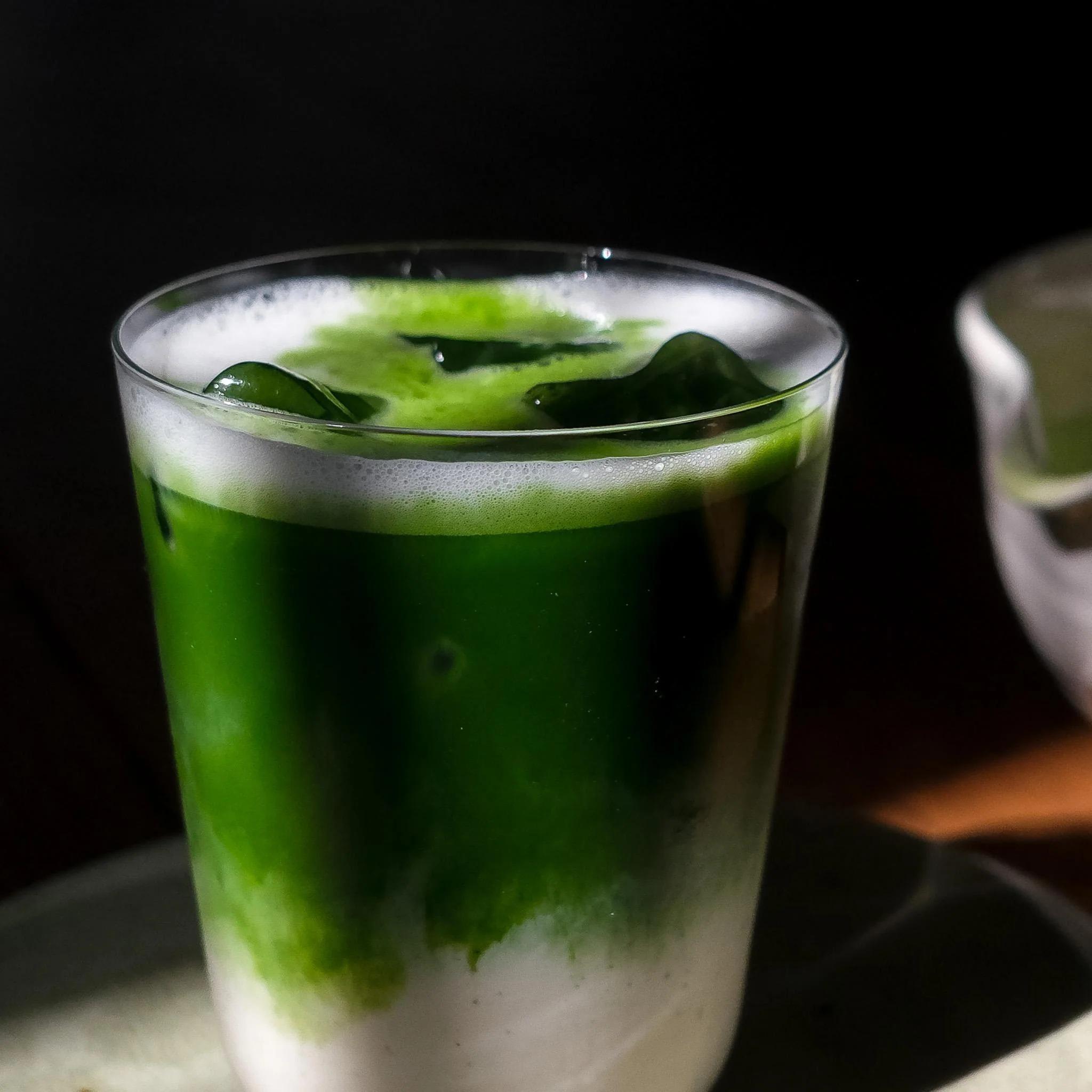
Formulating Matcha Chocolates, Biscuits & Confectionery: Industrial Solutions for Moisture Seizing, Fat Dispersion, and Long Shelf-Life Stability
A comprehensive technical B2B guide for food processing factories and industrial confectioners on formulating matcha chocolates, compound coatings, wafer creams, and shelf-stable biscuits. Solves moisture seizing, anhydrous fat dispersion, three-roll milling, and 18-month photo-oxidation.
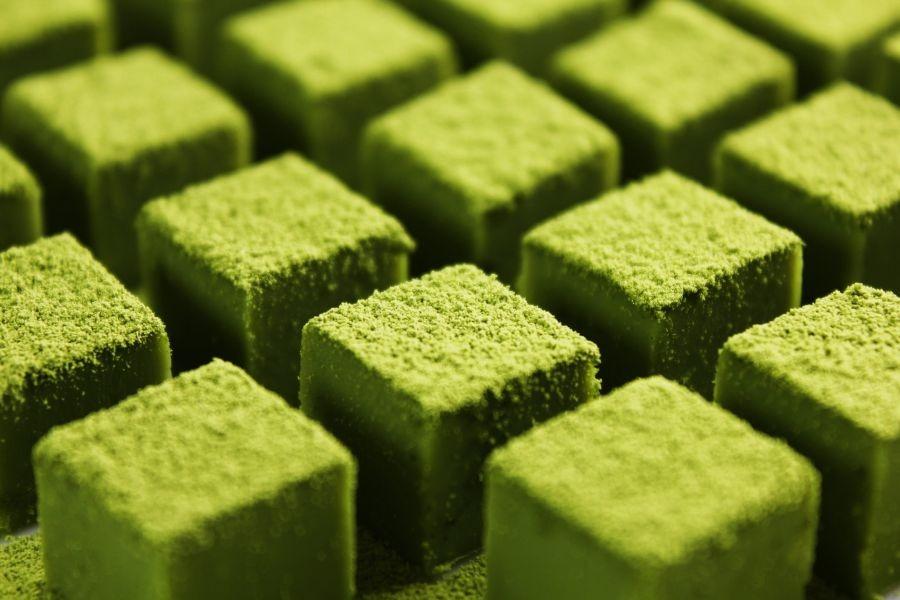
Table of Contents
Looking for Bulk Premium Matcha Powder?
Evaluate our premium shade-grown matcha grades (Ceremonial, Premium, and Culinary) in your own lab or kitchen.
In the global Consumer Packaged Goods (CPG) and confectionery industries, matcha has evolved far beyond coffee shop lattes and fresh cafe pastries. Today, high-margin, shelf-stable confectionery products—such as Matcha Nama Chocolate, Matcha-Coated Biscuits, Wafer Cream Fillings, Compound Coatings, and Industrial Matcha Cookies—represent some of the largest bulk purchasing volumes for wholesale matcha powder. However, scaling a matcha confectionery or baking line in an industrial food factory introduces physical and chemical challenges completely different from water-based beverages or short-shelf-life bakery items. In anhydrous (water-free) lipid systems, food engineers face three major technical bottlenecks: moisture-induced chocolate seizing, microscopic particle grittiness in fat matrices, and photo-oxidative color degradation over an 18-month shelf life. This comprehensive technical guide provides food scientists, R&D directors, and industrial procurement teams with actionable, factory-proven solutions to optimize formulation stability, texture, and Cost of Goods Sold (COGS).
1. Moisture Physics in Fat Systems: Preventing Chocolate Seizing
Unlike liquid beverages or high-moisture cake batters, chocolate and confectionery coatings are anhydrous lipid emulsions consisting of sugar crystals, milk solids, and cocoa butter (or vegetable fats) suspended in a continuous fat phase. The single most common failure mode in industrial matcha chocolate manufacturing is chocolate seizing.
- The Mechanism of Seizing: Chocolate contains a delicate balance of fats (cocoa butter or palm kernel oil) holding dry particulate solids in suspension. If bulk matcha powder with a moisture content exceeding 4.0% is added directly to melted chocolate, the moisture dissolves tiny surface sugar crystals. This creates concentrated syrup droplets that attract other sugar particles, causing instantaneous agglomeration. The smooth, liquid chocolate instantly transforms into a thick, dull, grainy paste that cannot be tempered, pumped, or molded.
- Industrial Moisture Threshold (< 3.5%): To guarantee fluid rheology during conching and enrobing, R&D formulators must specify bulk matcha with an internal moisture content strictly below 3.5% (ideally 2.5% to 3.0%). At Orisen Tea, our confectionery-grade tea powders are dried under low-temperature vacuum systems and immediately heat-sealed in nitrogen-flushed, multi-layer aluminum barrier bags to maintain ultra-low moisture metrics.
2. Fat Dispersion & Particle Rheology: Eliminating Grittiness
In water-based lattes, matcha particles hydrate and form colloidal suspensions. In cocoa butter or vegetable fat matrices, however, tea powder remains a suspended insolubilized solid. If particle size is improperly managed, consumers experience a dry, sandy mouthfeel (grittiness) and uneven color speckling.
A. Micro-Milling (D90 < 8μm) vs. Three-Roll Refining
Industrial confectionery lines employ two complementary strategies for particle size reduction:
- Water-Cooled Jet Milling (Raw Ingredient Stage): Standard culinary tea powders pulverized with hammer mills have an average particle size of 15 to 30 microns (D90 > 25μm), which feels extremely gritty when mixed with cocoa butter. Sourcing Water-Cooled Jet-Milled Culinary Matcha (D90 < 8μm) ensures the powder is already fine enough to integrate smoothly into fat tanks without clogging fine nozzles or deposit heads. (Read more about jet milling technology in Jet-Milled vs. Stone-Ground Matcha Comparison.)
- Roll Refining & Conching SOP (Factory Processing Stage): When manufacturing premium matcha chocolate slabs or coatings, the fat-sugar-matcha mass should pass through a 5-roll refinery set to a nip gap of 15 to 18 microns. Subsequent conching at 45°C to 50°C for 6 to 12 hours ensures complete lipid coating around each micro-fine tea particle, delivering a velvety melt-in-mouth texture.
B. Fat-Masking & Flavor Balance (Cutting Through Cocoa Butter)
Cocoa butter and milk fats coat the human tongue, creating a hydrophobic barrier that delays the release of water-soluble flavor compounds (L-theanine and catechins). Using delicate Ceremonial Grade matcha in white chocolate leads to a bland, overly sweet product where the tea flavor is completely lost.
Formulators must select a dedicated Premium Confectionery Grade Matcha harvested during late spring or second flush. These leaves contain a higher concentration of robust catechins (polyphenols) that punch cleanly through fat coatings, delivering a distinct, long-lasting tea finish. (Compare sensory profiles in our Matcha Ice Cream & Fat-Masking Guide.)
3. Photo-Oxidation & 18-Month Shelf-Life Color Stability
Industrial CPG products (such as matcha wafer cookies, chocolate bars, and packaged biscuits) require a shelf life of 12 to 18 months at ambient room temperature. Chlorophyll—the natural pigment giving matcha its electric green hue—is highly sensitive to light-induced oxidation (photo-bleaching) when exposed to supermarket fluorescent lights or clear packaging.
A. Chlorophyll Photo-Bleaching Kinetics
When photons hit the chlorophyll porphyrin ring in the presence of oxygen, singlet oxygen species are generated, degrading chlorophyll into colorless or dull yellowish-brown compounds. Unlike baked cakes (where heat drives pheophytinization), packaged confectionery fading is primarily light-driven.
B. Industrial Stabilization Protocols
- Antioxidant Synergy in Fat Phase: Incorporating 0.02% to 0.05% fat-soluble antioxidants—such as Mixed Tocopherols (Vitamin E) or Rosemary Extract—into the cocoa butter or vegetable fat phase scavenges free radicals and extends color stability by 40% over 18 months.
- Light-Barrier Packaging (Non-Negotiable SOP): Finished products must be wrapped in 100% light-proof metallized foil (such as BOPP/AL/PE) or opaque paperboard cartons. Avoid transparent window packaging for matcha-coated items unless UV-blocking films are utilized.
- pH Optimization for Biscuit Doughs: For long-shelf-life matcha cookies and biscuits baked at high temperatures, ensure the dough pH remains strictly neutral (pH 6.8 to 7.2) using buffered leavening (sodium bicarbonate) to prevent heat-induced browning during oven baking. (Read detailed baking chemistry in The Chemistry of Matcha in Baking.)
4. Industrial Application & Formulation Matrix
The table below summarizes formulation specifications, dosage rates, and processing parameters for major confectionery and long-shelf-life bakery categories:
| Product Category | Recommended Matcha Grade | Dosage Rate (%) | Key Moisture / Fat Spec | Processing / SOP Highlight |
|---|---|---|---|---|
| Nama Chocolate (Fresh Truffles) | Premium Grade Micro-Milled | 3.5% – 5.0% in base + dusting | High cream emulsion; Moisture < 3.5% in dry powder | Blend powder into warm cream base before emulsifying with white chocolate; dust top layer prior to cutting. |
| Compound Chocolate Coatings & Molded Bars | Culinary Grade A (Low Moisture) | 2.5% – 4.0% of total fat mass | Powder Moisture < 3.0%; Particle D90 < 8μm | Conche at 45°C–50°C; pass through 5-roll refinery; temper white cocoa butter base to 28.5°C before molding. |
| Wafer Biscuit Cream Fillings | Culinary Grade Matcha | 3.0% – 4.5% of cream mass | Hydrogenated palm fat base; Zero water addition | Dry-blend matcha with powdered sugar and powdered milk; aerate with vegetable fat in high-shear creamer. |
| Long Shelf-Life Cookies & Shortbreads | Heat-Stable Culinary Grade | 2.0% – 3.5% of flour weight | Dough pH 6.8–7.2; Final cookie moisture < 2.5% | Bake at lower temperature (150°C–160°C); use steam injection; wrap in metallized barrier foil. |
5. COGS Optimization & Bulk Factory Sourcing
For factory procurement directors, ingredient cost directly dictates product line viability. High-end Japanese ceremonial powders ($60–$100/kg) are cost-prohibitive for mass-market confectionery lines. Conversely, cheap, unshaded green tea powders ($8–$12/kg) cause severe formulation failures—producing dull brown chocolates with a bitter, grassy off-note and heavy sediment.
The optimal factory solution is sourcing direct from a vertically integrated manufacturer like Hunan Orisen Biotech Co., Ltd. (Orisen Tea). Operating our own high-altitude shade-grown tea gardens and automated water-cooled jet milling lines in China, we supply export-grade Industrial Culinary Matcha at $18 to $28/kg. This represents a 30% to 50% COGS cost reduction while delivering:
- Guaranteed Ultra-Low Moisture (< 3.5%): Pre-tested for zero chocolate seizing risk.
- Micro-Fine Particle Classification (D90 < 8μm): Ensures silky dispersion in fat tanks and roll refiners.
- Full Global Compliance (SGS / Eurofins): Every batch is backed by 500+ multi-residue pesticide screens and heavy metal COAs (Lead < 1.0mg/kg, Arsenic < 0.2mg/kg) meeting strict US FDA and EU EFSA import limits. (See full testing metrics in Global Matcha Compliance Guide.)
Partner with Orisen Tea for Confectionery R&D & Free Factory Samples
Hunan Orisen Biotech Co., Ltd. (Orisen Tea) is a trusted B2B manufacturer and bulk exporter of wholesale matcha powder certified under FDA, USDA Organic, EU Organic, ISO22000, HACCP, and Halal standards. Our food technology lab works directly with R&D engineers at confectionery plants, commercial bakeries, and CPG brand owners to optimize recipe formulations, conduct viscosity/rheology trials, and assist with custom private label packaging (OEM Private Label Solutions).
Contact our technical sales team today to request a Free Industrial Sample Kit (500g – 1kg) of our low-moisture, jet-milled confectionery matcha grades for your factory R&D trial.
FAQ: Industrial Matcha Confectionery & Baking
Q1: Why did our matcha white chocolate seize and turn thick during factory mixing?
Chocolate seizing is caused by water moisture dissolving dry sugar particles, forming sticky droplets that agglomerate. Check the moisture content of your bulk matcha powder (must be < 3.5%) and ensure ambient humidity in the conching room is kept below 40% RH. Never add liquid flavorings containing water into melted chocolate.
Q2: How can we prevent matcha-coated biscuits from fading on retail shelves after 6 months?
Fading is caused by photo-oxidation under light. Add fat-soluble antioxidants (such as mixed tocopherols at 0.03%) into the coating fat phase, and package the finished biscuits in 100% light-proof metallized foil (BOPP/AL/PE) or opaque cartons. Avoid clear window packaging.
Q3: What is the recommended MOQ for industrial bulk orders for food factories?
For standard bulk packaging (25kg fiber drums with dual nitrogen-flushed inner aluminum bags), our MOQ starts at 100kg. For custom particle sizes or custom moisture specifications, our R&D line accepts orders starting at 500kg with batch-specific SGS Certificates of Analysis (COA).
Interested in Sourcing Premium Matcha Powder?
Hunan Orisen Biotech Co., Ltd. is a certified factory source. Contact us for bulk wholesale pricing, custom formulation, or OEM private label packaging.
Related Articles
Formulating Hojicha Powder: Commercial Applications in Lattes, Bakery, and Low-Caffeine Menus
Formulating Matcha Ice Cream & Gelato: Overcoming Flavor Suppression and Fat-Masking in Cold Emulsions