Matcha vs. Green Tea Powder: What's the Difference for Food Manufacturers?
A comprehensive B2B technical guide comparing authentic matcha and standard green tea powder, exploring differences in cultivation, processing, chemical composition, and performance in food and beverage formulations.
Table of Contents
Looking for Bulk Premium Matcha Powder?
Evaluate our premium shade-grown matcha grades (Ceremonial, Premium, and Culinary) in your own lab or kitchen.
For food and beverage manufacturers, sourcing the right green tea ingredient is a critical decision that directly impacts product quality, shelf-life stability, and the Cost of Goods Sold (COGS). As the global demand for green-tea-flavored and health-focused products continues to rise, procurement managers and R&D teams frequently encounter two options: Matcha Powder and Green Tea Powder. While they may look similar in their dry states, they are fundamentally different ingredients. Using standard green tea powder as a cheap substitute for authentic matcha in applications like lattes, ice cream, or baked goods often leads to severe formulation failures, including rapid browning, bitter off-flavors, and gritty sedimentation. This technical guide provides a detailed B2B comparison of the agricultural, chemical, and physical differences between matcha and green tea powder, helping manufacturers make the most strategic sourcing decisions.
1. Agricultural Differences: Shading vs. Open-Sun Cultivation
The primary divergence between matcha and green tea powder begins in the tea garden, long before the leaves are harvested. The cultivation method determines the chemical composition and color potential of the raw leaves:
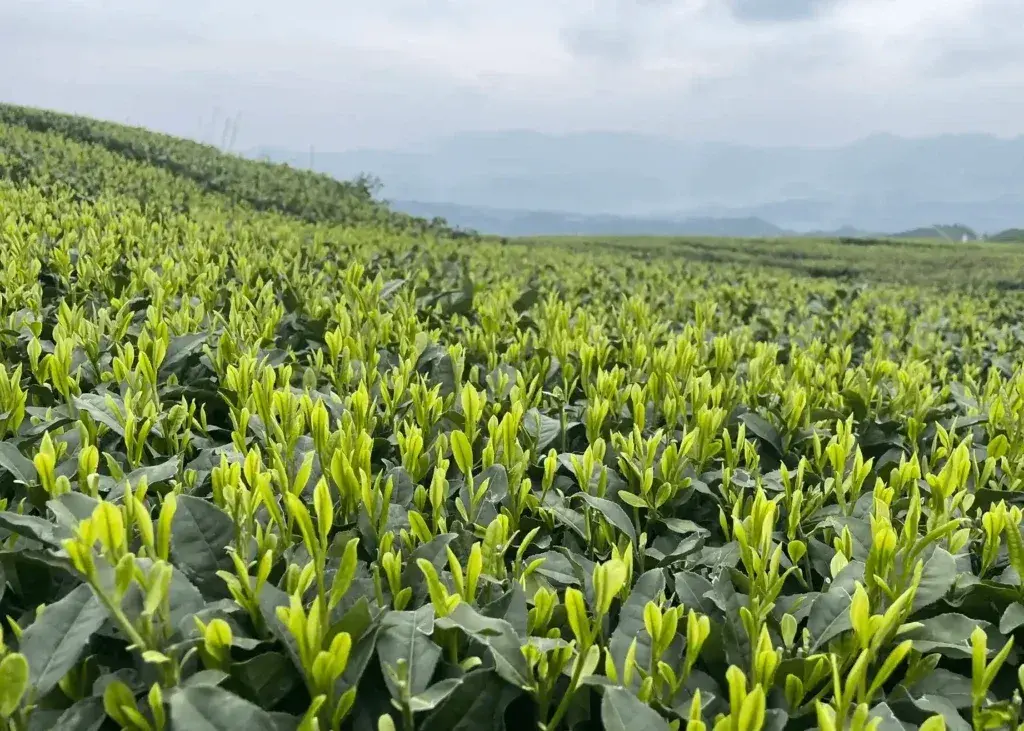
- Authentic Matcha (Shade-Grown): Approximately 20 to 30 days before harvest, the tea fields are covered with black netting (known as the Tana shading method) to block out 90% to 98% of sunlight. (Read more about this in Matcha Tea Garden Management.) This light deprivation forces the tea plants to produce massive amounts of chlorophyll, resulting in a vibrant, deep jade green leaf. It also halts the conversion of the sweet amino acid L-theanine into bitter catechins, allowing L-theanine to accumulate.
- Green Tea Powder (Sun-Grown): The tea plants (often lower-grade Sencha or summer-harvested leaves) are grown in full sunlight throughout their lifecycle. Without shading, the plants synthesize high levels of catechins (polyphenols) through photosynthesis, which makes the leaves naturally bitter and astringent, while the chlorophyll content remains significantly lower, yielding a yellowish-green or olive-brown hue.
2. Processing Differences: Tencha vs. Sencha Milling
The manufacturing process further separates these two ingredients, affecting both the texture and purity of the final powder:
A. Raw Material Selection
Matcha is ground exclusively from Tencha—steamed green tea leaves that have been flat-dried and meticulously sorted to remove all stems, veins, and fibrous parts. Removing these parts is critical because stems and veins contain very little chlorophyll and are rich in woody cellulose, which introduces bitterness and grittiness.
In contrast, green tea powder is typically ground from Sencha or standard green tea leaves, where the entire leaf (including the bitter stems and veins) is rolled and dried. (Learn about the full manufacturing journey in The Matcha Production Process.)
B. Grinding Technology and Particle Size
The grinding method directly determines the solubility, mouthfeel, and stability of the powder in liquid formulations:
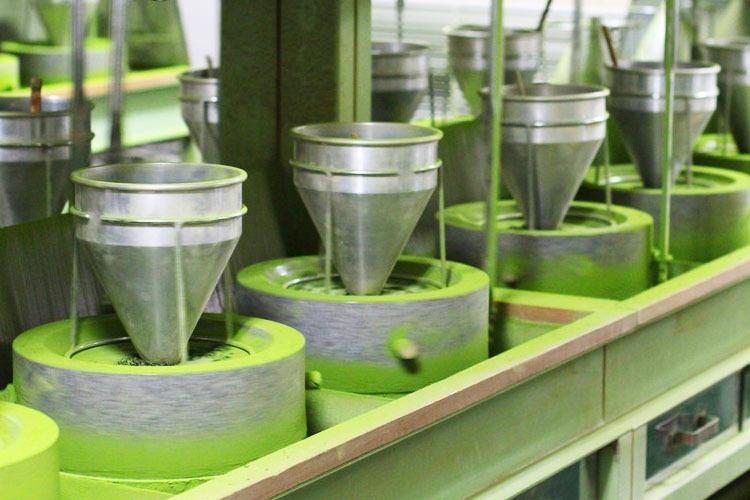
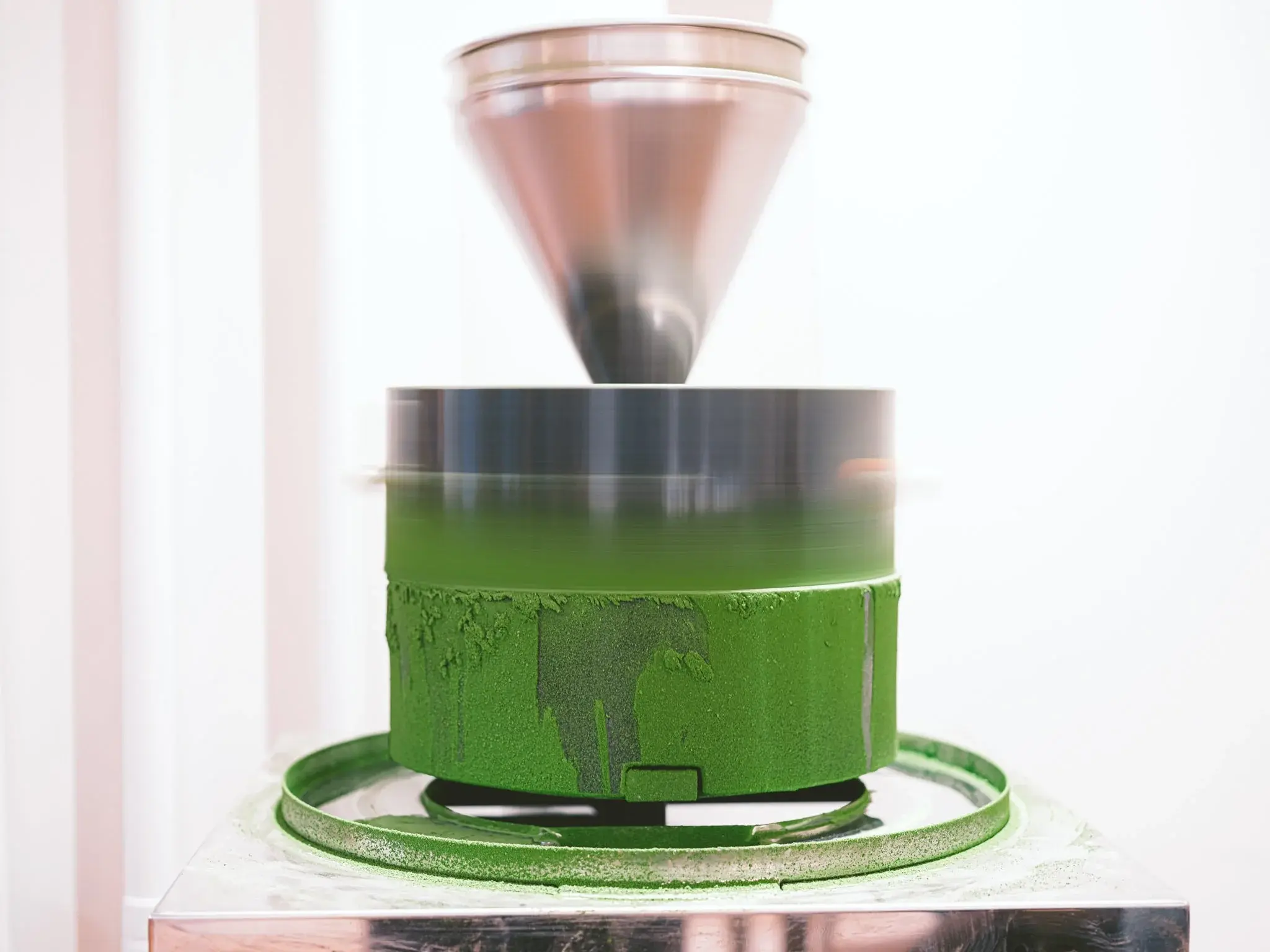
- Matcha Grinding: Tencha is ground using slowly rotating granite stone mills or advanced water-cooled jet mills to achieve a micro-fine particle size of 5 to 10 microns (D90 < 10μm). The water-cooling jackets keep processing temperatures below 40°C, preventing heat-induced oxidation and preserving the bright green color. At this particle size, the powder feels silky and suspends smoothly in liquids.
- Green Tea Powder Grinding: Standard green tea leaves are ground using high-speed mechanical hammer mills or ball mills, which generate significant heat during processing. This heat oxidizes the chlorophyll, turning the powder yellowish-brown. The resulting particle size is much larger, typically 15 to 30 microns or more, which feels gritty and settles rapidly in liquid applications.
3. Chemical Composition and Sensory Comparison
The differences in cultivation and processing result in distinct chemical profiles, which dictate how the ingredients behave in food systems:
| Parameter | Authentic Matcha Powder | Standard Green Tea Powder |
|---|---|---|
| Chlorophyll Content | High (Vibrant Jade Green) | Low (Dull Yellow-Green / Olive-Brown) |
| L-Theanine (Amino Acids) | High (> 1.5% to 2.0%) | Low (< 0.5%) |
| Catechins (Polyphenols) | Moderate (Balanced Astringency) | High (Intense Bitterness) |
| Particle Size (D90) | 5 - 10 microns (Silky) | 15 - 30+ microns (Gritty) |
| Flavor Profile | Rich, sweet umami, grassy, smooth | Bitter, astringent, woody, flat |
4. Performance in Food & Beverage Formulations
Choosing between these two ingredients has profound effects on the final product's sensory appeal and shelf-life:
A. Ready-to-Drink (RTD) Beverages & Lattes
In liquid formulations, particle size and suspension are critical. Because green tea powder has a larger particle size (15-30 microns), it settles to the bottom of the bottle or cup almost immediately, creating a gritty, sandy mouthfeel and an unappealing sediment layer. Authentic matcha (5-10 microns) suspends much longer and can be permanently stabilized using tiny amounts of hydrocolloids. (For technical solutions, read our guide on Formulating RTD Matcha Beverages.) Furthermore, the low chlorophyll content in green tea powder means lattes made with it will look muddy and greyish-brown rather than a vibrant, appealing green.
B. Bakery & Confectionery
During commercial baking, the heat of the oven accelerates the degradation of chlorophyll into pheophytin (browning). Because standard green tea powder already has low chlorophyll levels and has been partially oxidized during hammer-milling, baked goods made with it will turn a dull, unappealing yellowish-brown. Sourcing a heat-stable Culinary Grade Matcha ensures that the product retains a vibrant green color and a distinct tea flavor after thermal processing. (Learn how to prevent baking discoloration in The Chemistry of Matcha in Baking.)
C. Ice Cream & Dairy Products
Cold temperatures suppress human taste buds, requiring a robust flavor profile. While green tea powder is bitter, it lacks the complex umami and sweet notes of matcha. Using a high-quality Premium Grade Matcha or Premium Culinary Grade provides the perfect balance of color and flavor, cutting through the heavy fats of dairy and plant-based milks cleanly.
5. B2B Sourcing Strategy: Cost vs. Quality (COGS vs. ROI)
While standard green tea powder is significantly cheaper than authentic matcha, B2B buyers must look at the total return on investment (ROI):
- Higher Usage Rates: Because green tea powder has a weaker color and flatter flavor profile, formulators often have to use 1.5 to 2 times more powder in the recipe to achieve the desired green color and tea taste. This higher usage rate can negate the initial cost savings.
- Brand Reputation: Modern consumers are highly educated. A muddy-looking, bitter, or gritty matcha latte or ice cream will lead to poor customer reviews and lower repeat purchase rates.
- Adulteration Risks: Some low-cost suppliers blend green tea powder with copper chlorophyllin (a synthetic dye) to mimic the color of matcha. This is considered food fraud and can lead to regulatory rejection in markets like the US and EU. (See how to detect fake matcha in Matcha Quality Grading & Evaluation Standards.)
Partner with Orisen Tea for Authentic Wholesale Matcha
Hunan Orisen Biotech Co., Ltd. (Orisen Tea) is a vertically integrated manufacturer and exporter of bulk matcha powder. We manage our own shade-grown tea gardens and operate state-of-the-art processing facilities certified under FDA, USDA Organic, EU Organic, ISO22000, and Halal standards. We offer a full range of authentic matcha grades—including Ceremonial Grade, Premium Grade, and Culinary Grade—tailored for industrial food and beverage applications. By sourcing directly from our factory, you can bypass trading intermediaries, reducing your raw ingredient costs by 30% to 50% while securing a 100% pure, compliant, and traceable supply chain. Contact our B2B sales team today to request a free sample kit and discuss your formulation requirements.
FAQ: Matcha vs. Green Tea Powder
Q1: Can we label green tea powder as "Matcha" on our ingredient list?
Regulatory standards vary by country. In many jurisdictions, including Japan and China, there are strict national standards defining matcha (requiring shade-growing and Tencha processing). Labeling standard sun-grown green tea powder as "Matcha" can be flagged as misleading labeling by food authorities. Using authentic matcha ensures full regulatory compliance and protects your brand reputation.
Q2: How can we quickly test if a supplier's sample is authentic matcha or green tea powder?
Perform the "Rub Test": Smear a small amount of the powder onto a clean sheet of white paper using your finger. Authentic matcha will leave a smooth, continuous, vibrant green line due to its micro-fine particle size (5-10 microns). Green tea powder will feel gritty, leave a rough, broken line, and show visible yellow-brown specks of leaf veins and stems.
Q3: Does Orisen Tea supply organic certified green tea ingredients?
Yes. We offer USDA Organic and EU Organic certified matcha powder, backed by full traceability and transaction certificates (TCs) for every shipment, ensuring compliance with the strictest international pesticide residue limits.
Interested in Sourcing Premium Matcha Powder?
Hunan Orisen Biotech Co., Ltd. is a certified factory source. Contact us for bulk wholesale pricing, custom formulation, or OEM private label packaging.
Related Articles
Jet-Milled vs. Stone-Ground Matcha: Which is Better for Commercial Use?