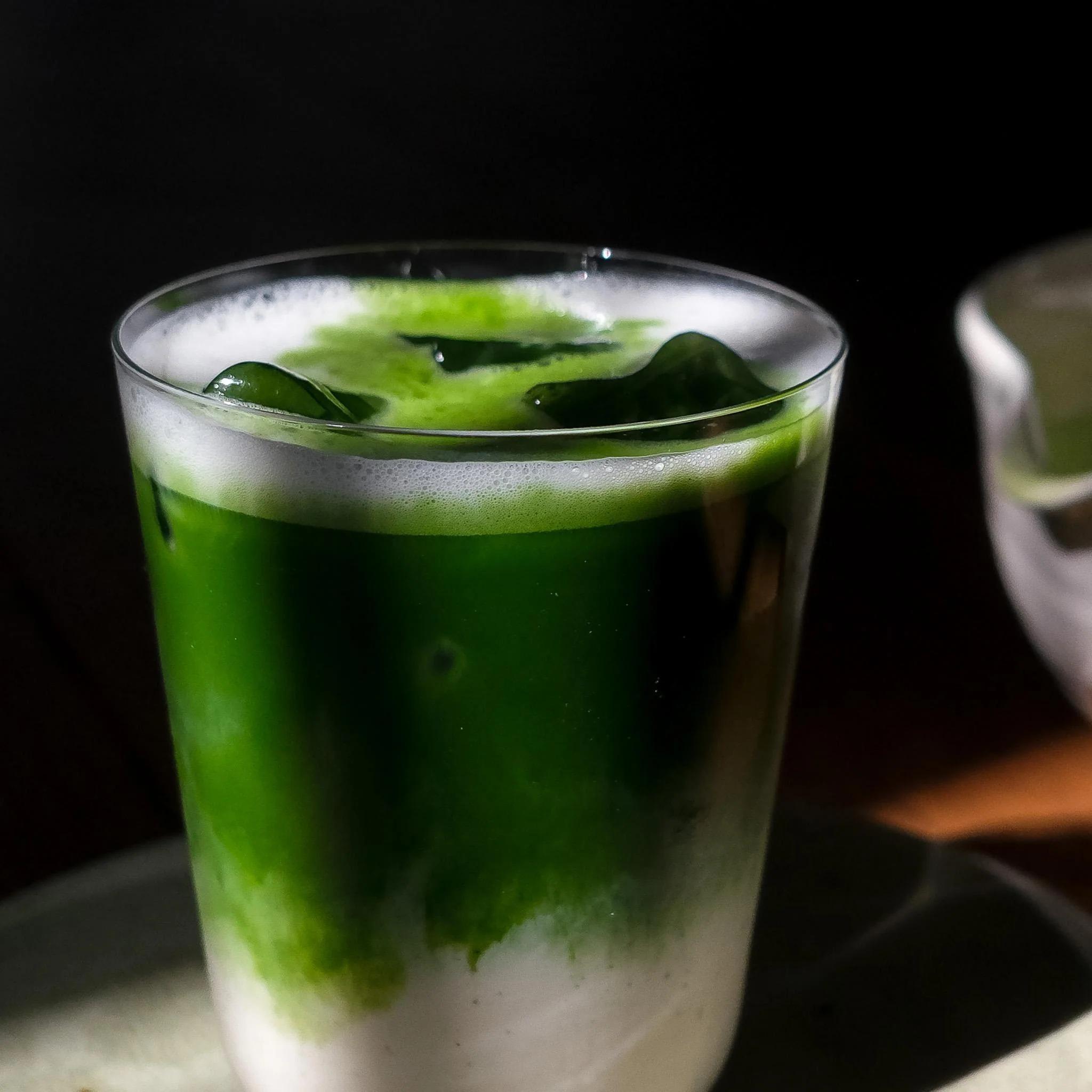
Formulating RTD Matcha Beverages: Industrial Solutions for Sedimentation and Oxidation
An industrial R&D guide for formulating RTD matcha beverages. Learn how to solve physical sedimentation using micro-milled matcha and hydrocolloids, and prevent chemical oxidation/browning during UHT processing.
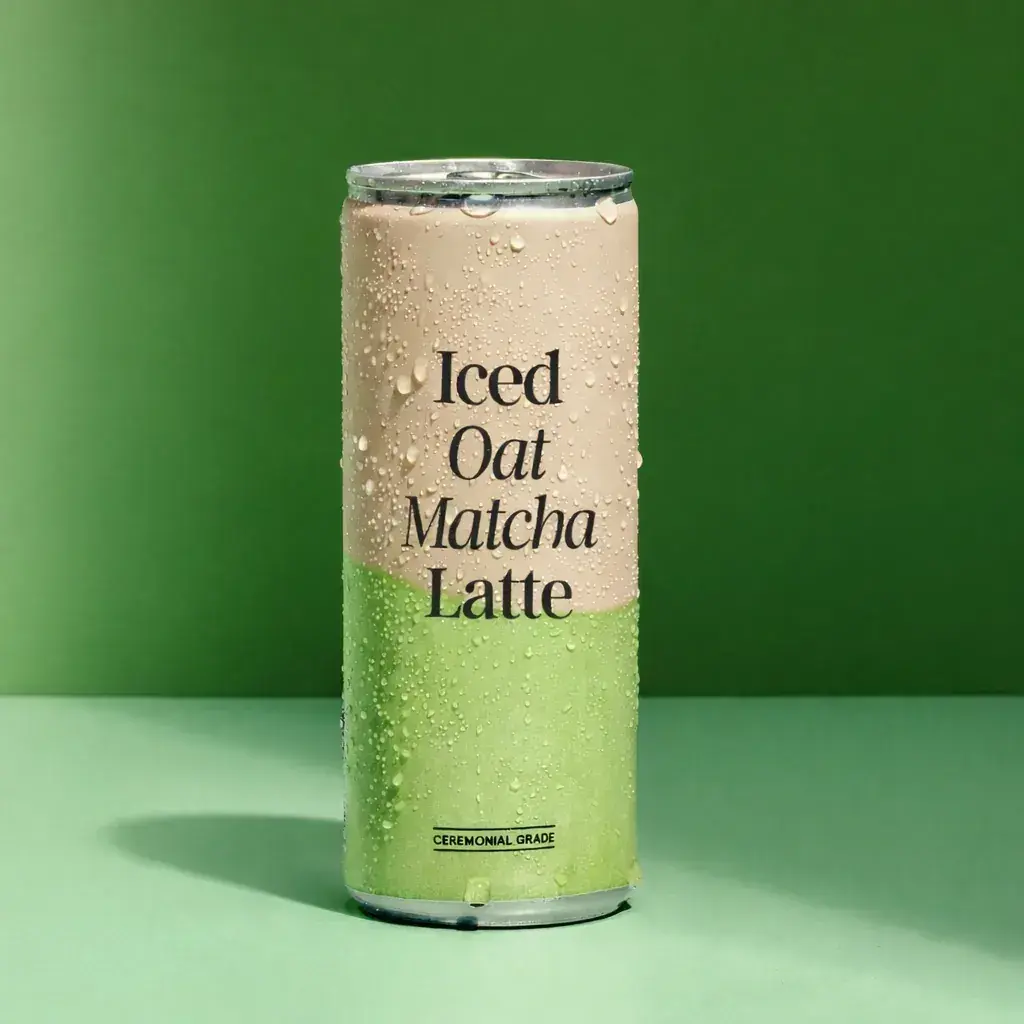
Table of Contents
Looking for Bulk Premium Matcha Powder?
Evaluate our premium shade-grown matcha grades (Ceremonial, Premium, and Culinary) in your own lab or kitchen.
The global market for Ready-to-Drink (RTD) matcha beverages—ranging from canned oat milk matcha lattes to sparkling matcha infusions—is experiencing unprecedented growth. Driven by health-conscious consumers seeking clean-label energy and "calm focus," beverage brands are rushing to launch matcha-based products. (See our overview of Matcha Application Scenarios for more beverage insights.) However, formulating a shelf-stable RTD matcha beverage presents severe technical hurdles. Unlike soluble tea extracts, matcha is a suspended micro-powder. During a typical 6-to-12-month shelf life, RTD manufacturers face two primary challenges: physical sedimentation (phase separation) and chemical oxidation (browning). This guide provides food scientists, R&D directors, and beverage formulators with industrial solutions to overcome these challenges.
1. The Physics of Sedimentation: Stokes' Law in Beverage Formulation
To understand why matcha settles in a bottle, we must look at Stokes' Law, which governs the settling velocity of spherical particles in a fluid:
V = (2 * g * r² * (dp - df)) / (9 * η)
Where:
- V is the settling velocity.
- g is the acceleration due to gravity.
- r is the radius of the particle.
- dp - df is the density difference between the particle (matcha) and the fluid (water/milk).
- η is the dynamic viscosity of the fluid.
2. Solution 1: Particle Size Control (Micro-Milled Matcha)
According to Stokes' Law, reducing the particle radius has a quadratic effect on reducing settling speed. Standard stone-ground matcha typically has a particle size of 15 to 25 microns (D90), which settles within minutes in a liquid medium.
For RTD applications, manufacturers must source micro-milled or jet-milled matcha with a particle size of 5 to 8 microns (D90 < 10μm). At this micro-fine level:
- The settling velocity is reduced by up to 90% compared to standard culinary grades.
- Brownian motion (the random movement of microscopic particles in a fluid) begins to counteract gravity, helping keep the particles in suspension.
- The mouthfeel is silky and smooth, with zero grittiness or sandy texture.
3. Solution 2: Creating a Weak Gel Network (Hydrocolloids)
While reducing particle size slows down sedimentation, it cannot prevent it entirely over a 12-month shelf life. To achieve permanent suspension, formulators must modify the fluid's viscosity (η) by building a weak gel network (also known as a fluid gel) using hydrocolloids.
- Low Acyl Gellan Gum: This is the industry standard for RTD matcha suspension. At extremely low concentrations (0.02% to 0.035%), low acyl gellan gum forms a three-dimensional crystalline network in the presence of cations (such as calcium or magnesium in milk/water). This network has a specific "yield stress"—it is strong enough to support the weight of the micro-fine matcha particles when the bottle is static, but breaks down instantly under the shear of pouring or drinking, ensuring a clean, non-viscous mouthfeel.
- Microcrystalline Cellulose (MCC) & Sodium Carboxymethyl Cellulose (CMC): For high-protein formulations like matcha dairy lattes or plant-based milk lattes, a blend of MCC and CMC (typically 0.1% to 0.2%) is recommended. MCC coats the milk proteins and matcha particles, preventing steric aggregation and phase separation.
- High-Pressure Homogenization: After mixing the hydrocolloids and matcha, the beverage must pass through a high-pressure homogenizer at 15 to 20 MPa (150-200 bar). This breaks down any aggregated matcha clumps and ensures the hydrocolloid network is uniformly distributed.
4. The Chemistry of Oxidation: Chlorophyll Degradation
The vibrant green color of matcha is due to chlorophyll. Chlorophyll is highly unstable and degrades through two primary chemical pathways during thermal processing and storage:
- Pheophytinization: Heat and acid displace the central magnesium ion (Mg²⁺) in the chlorophyll ring, replacing it with hydrogen ions (H⁺) to form pheophytin, which is olive-brown.
- Photo-oxidation: Exposure to light and oxygen breaks down the porphyrin ring, leading to complete bleaching of the green color.
5. Solution 3: Anti-Oxidant Synergy and pH Control
To prevent chemical browning, formulators must establish a protective chemical barrier in the liquid matrix:
- Ascorbic Acid (Vitamin C) / Sodium Ascorbate: Adding 0.02% to 0.05% of sodium ascorbate acts as an oxygen scavenger. It reacts with dissolved oxygen in the liquid before the oxygen can oxidize the catechins and chlorophyll in the matcha.
- pH Optimization: Chlorophyll degradation is highly accelerated in acidic environments (pH < 6.0). For RTD matcha teas, the pH should be adjusted to a neutral or slightly alkaline range (pH 6.8 to 7.2) using food-grade sodium bicarbonate (baking soda) or dipotassium phosphate. This stabilizes the magnesium ion in the chlorophyll structure.
6. Solution 4: Thermal Processing Optimization (UHT vs. Retort)
Thermal sterilization is required for shelf-stable beverages, but excessive heat will destroy matcha's color and delicate flavor.
- Ultra-High Temperature (UHT) Pasteurization: This is the preferred sterilization method. Exposing the beverage to 137°C to 142°C for 3 to 5 seconds followed by immediate flash cooling to below 25°C minimizes the thermal stress on chlorophyll.
- Avoid Retort Sterilization: Batch retort sterilization (e.g., 121°C for 15-20 minutes in-can) will completely degrade the chlorophyll, turning the matcha brown and giving it a cooked, stale tea flavor.
- De-aeration: Before UHT processing, the liquid should pass through a vacuum de-aerator to remove dissolved oxygen, which prevents thermal oxidation during the heating cycle.
- Packaging Gas Management: Use nitrogen flushing (liquid nitrogen dosing) during the capping process to ensure the headspace oxygen level is below 1.0%. The packaging must also provide a 100% light barrier (such as aluminum cans) or utilize UV-blocking PET bottles.
7. Compliance Note for B2B Buyers
According to international food standards and China's National Standard GB/T 34778, pure matcha powder must be 100% additive-free. The stabilizers (such as gellan gum) and antioxidants (such as sodium ascorbate) discussed in this guide are formulation recommendations to be added during the beverage blending process at your manufacturing facility, not in the raw matcha powder itself. Always ensure your bulk supplier provides 100% pure, certified matcha powder. (For details on evaluating purity, read our Matcha Quality Grading & Evaluation Standards.)
Partner with Orisen Tea for RTD Formulation Support
Hunan Orisen Biotech Co., Ltd. (Orisen Tea) is more than a bulk matcha supplier; we are your technical partner in product development. We offer a specialized Premium Grade Matcha (RTD-Grade Micro-Milled Matcha), specifically processed to ensure optimal dispersion, vibrant green color, and heat stability in beverage lines. Our application lab can assist your R&D team with hydrocolloid selection, dosage optimization, and stability testing. All our products are backed by FDA, USDA Organic, EU Organic, and ISO22000 certifications. Contact our technical sales team today to request free samples and discuss your formulation requirements.
Interested in Sourcing Premium Matcha Powder?
Hunan Orisen Biotech Co., Ltd. is a certified factory source. Contact us for bulk wholesale pricing, custom formulation, or OEM private label packaging.
Related Articles
Formulating Hojicha Powder: Commercial Applications in Lattes, Bakery, and Low-Caffeine Menus
Formulating Matcha Ice Cream & Gelato: Overcoming Flavor Suppression and Fat-Masking in Cold Emulsions