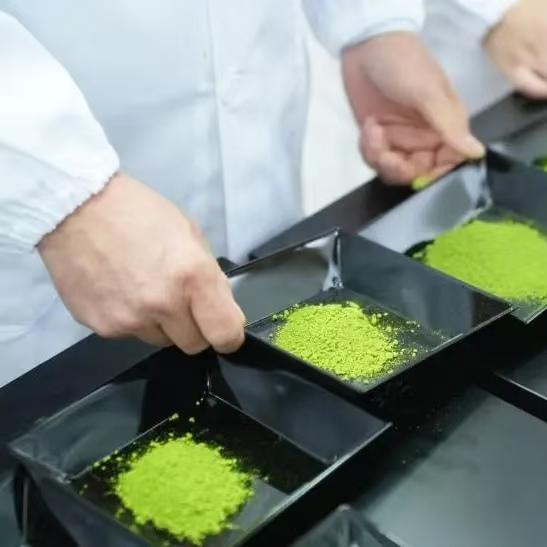
How to Store Bulk Matcha Powder: A B2B Guide to Warehousing, Packaging & Shelf Life
A comprehensive technical B2B guide for food manufacturers and distributors on bulk matcha storage, packaging specifications (MAP, nitrogen flush, OTR/MVTR), cold-chain warehousing, and acclimatization SOPs to preserve shelf life.
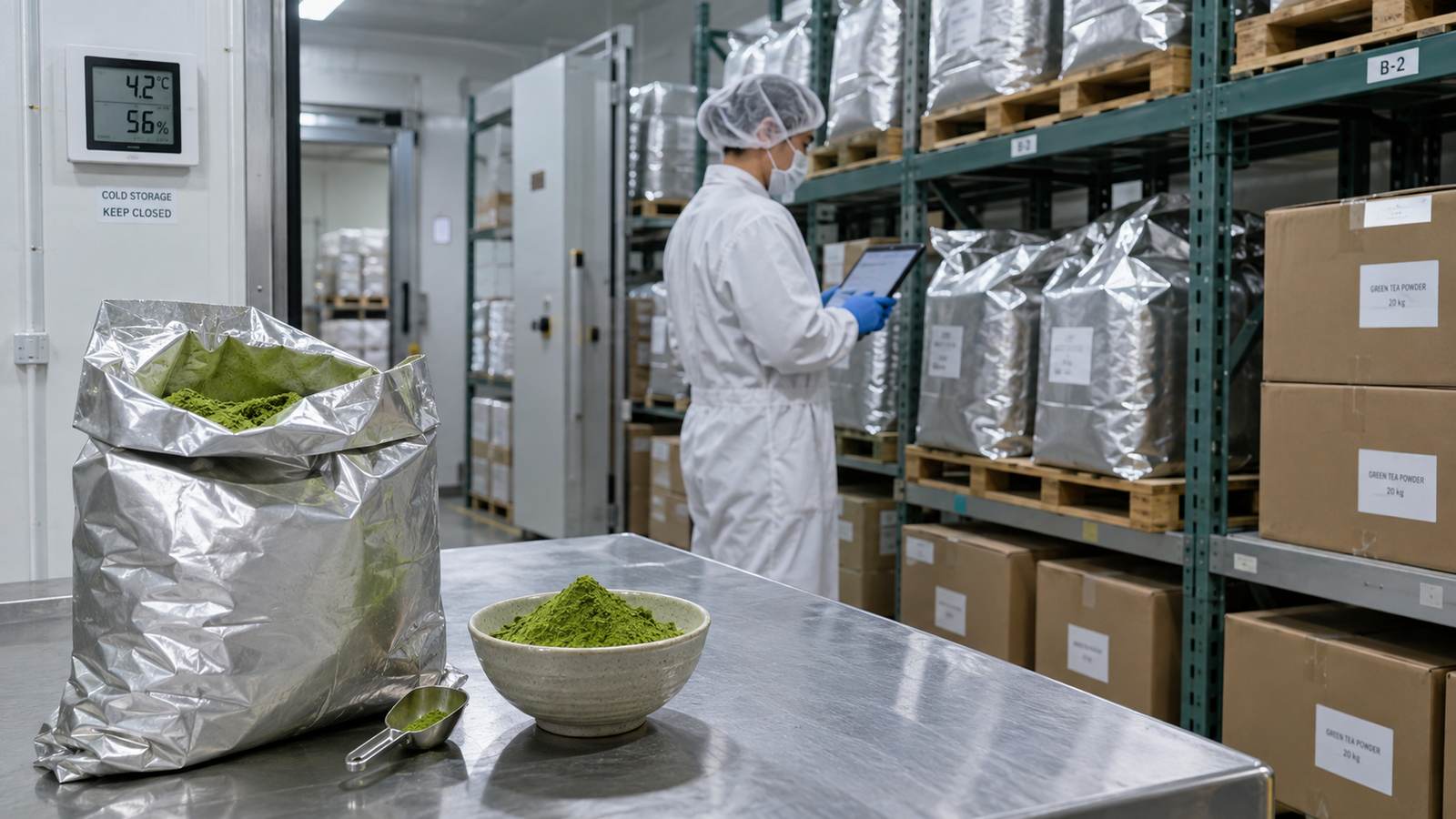
Table of Contents
Looking for Bulk Specialty Tea Powders?
Evaluate our premium ground jasmine, oolong, and Earl Grey tea powders in your own lab or kitchen.
For global food manufacturers, beverage chains, and wholesale distributors, purchasing bulk matcha powder in 5kg, 10kg, or 25kg packaging offers significant economies of scale. However, unlike traditional black or oolong teas, matcha is a micro-milled, highly sensitive green tea powder. Its large surface-area-to-mass ratio makes it uniquely vulnerable to rapid degradation caused by oxygen, moisture, heat, and light. When improperly stored, premium bulk matcha can lose its vibrant green color, fresh umami aroma, and antioxidant potency within weeks, resulting in unappealing brown baked goods, muddy beverages, and severe financial losses. This technical B2B guide explores the chemical mechanisms of matcha degradation, industrial packaging standards, cold-chain warehouse SOPs, and dew-point acclimatization protocols to ensure a 24-month shelf life without quality loss.
1. The Food Chemistry of Matcha Degradation
To establish effective storage protocols, quality assurance (QA) teams must understand the chemical degradation pathways that affect green tea powder:
- Chlorophyll Oxidation (Pheophytinization): The vibrant jade green color of matcha is derived from chlorophyll a and b. In the presence of heat, acid, or oxygen, the central magnesium ion (Mg²⁺) in the chlorophyll ring is displaced by hydrogen ions, converting chlorophyll into pheophytin, which imparts a dull olive-brown color.
- Aroma Compound Volatilization: The fresh, sweet "shade aroma" (known as ooika) comes from volatile compounds such as dimethyl sulfide (DMS) and monoterpenes. Exposure to ambient temperatures causes these volatile compounds to evaporate, leaving the powder smelling stale, flat, or dusty.
- Catechin and L-Theanine Oxidation: L-theanine provides sweet umami notes, while catechins offer antioxidants. In humid or warm environments, catechins undergo enzymatic browning, creating astringent off-flavors and degrading the product's nutritional profile.
- Moisture Absorption & Water Activity (a_w): Bulk matcha is highly hygroscopic. If its internal moisture content rises above 5.0% or water activity (a_w) exceeds 0.30, microscopic caking occurs, accelerating chemical degradation and opening risks for microbial proliferation.
2. Industrial Packaging Specifications for Bulk Matcha
Protecting bulk matcha starts with selecting high-barrier Modified Atmosphere Packaging (MAP). Industrial buyers should enforce the following material specifications for wholesale orders:
| Packaging Component | Target Specification | Technical Function |
|---|---|---|
| Substrate Structure | Multi-layer Foil (PET / AL / PE, > 120 microns) | Provides 100% light barrier and mechanical puncture resistance. |
| Oxygen Transmission Rate (OTR) | < 0.1 cm³/m² · 24h · atm | Prevents atmospheric oxygen ingress that triggers chlorophyll browning. |
| Moisture Vapor Transmission Rate (MVTR) | < 0.1 g/m² · 24h | Blocks humidity penetration, keeping moisture < 4.5% and a_w < 0.30. |
| Headspace Atmosphere | Nitrogen Flush (Residual O₂ < 0.5%) | Displaces ambient oxygen before heat-sealing. |
3. Cold Storage SOPs & Warehouse Temperature Controls
Temperature is the single primary driver of chemical degradation rates. Storage conditions must be strictly controlled across warehouse facilities:
- Long-Term Warehouse Storage (Over 6 Months): Store unopened bulk bags at refrigerated temperatures between 2°C and 8°C (35°F to 46°F). For multi-year raw inventory, deep freezing at -18°C (0°F) completely halts oxidation.
- Short-Term Operational Storage (Under 30 Days): Maintain a cool, dark room at < 20°C (68°F) with relative humidity (RH) < 50%.
- Light Exclusion: Never store bulk bags in direct sunlight or under unshielded UV warehouse lighting. Outer corrugated cartons or fiber drums must remain sealed until actual batch mixing.
4. The Acclimatization SOP: Preventing Moisture Condensation
The most common cause of bulk matcha ruin in food factories is dew-point condensation. When a cold 25kg bag stored at 4°C is brought directly into a warm, humid production room (e.g., 25°C, 65% RH) and opened immediately, atmospheric moisture condenses instantly on the cold powder surface, forming dark green clumps and starting rapid oxidation.
The Staged Acclimatization Protocol (Mandatory SOP)
- Stage 1 (Transfer): Move the sealed bulk carton/drum from the 4°C cold store to an intermediate buffer room (15°C to 18°C) 24 hours prior to production.
- Stage 2 (Equilibration): Transfer the unopened package to the ambient production floor (20°C to 22°C) and allow it to sit unopened for an additional 12 to 24 hours until the core temperature matches room temperature.
- Stage 3 (Verification & Opening): Check the outer surface temperature with an infrared thermometer to confirm it matches room temperature before breaking the nitrogen seal.
- Stage 4 (Re-Sealing): If using a portion of the bulk bag, purge the remaining headspace with food-grade nitrogen or squeeze out excess air, securely clamp the inner liner, and return to cold storage.
5. Storage Impact Matrix: Quality Loss Over Time
| Storage Environment | Color Retention (12 Months) | Flavor Profile (12 Months) | Expected Shelf Life |
|---|---|---|---|
| Cold Store (2–8°C) + Nitrogen MAP | 95–98% (Vibrant Jade Green) | Fresh, sweet umami retained | 24+ Months |
| Ambient Cool (18–22°C) + Sealed Foil | 80–85% (Slight Yellowing) | Mild umami loss, slight astringency | 6–9 Months |
| Warm Ambient (> 25°C) or High RH | < 60% (Dull Olive-Brown) | Stale, sour, bitter off-notes | < 3 Months |
Partner with Orisen Tea for Reliable Bulk Supply
Hunan Orisen Biotech Co., Ltd. (Orisen Tea) supplies export-grade bulk matcha packaged directly under strict nitrogen-flushed conditions in multi-layer aluminum barrier bags. We manage cold-chain logistics from our high-altitude tea processing plant to global destination ports. Every bulk shipment includes batch-specific Certificates of Analysis (COA) for moisture, particle size, and microbial safety. Contact our technical sales team today to request bulk sample kits, specifications, and custom packaging options.
FAQ: Bulk Storage & Handling
Q1: How can warehouse managers check if a bulk bag has lost its vacuum/nitrogen seal?
Perform a squeeze and visual check. Nitrogen-flushed bags should feel firm and pillow-like or snug. If the outer bag is loose, wrinkled, or feels completely soft with excess ambient air movement, the seal may be compromised. Test the headspace oxygen level with an optical oxygen meter if available.
Q2: Is it better to freeze or refrigerate bulk matcha?
For long-term storage exceeding 12 months, deep freezing (-18°C) is ideal as it practically freezes chemical reaction rates. However, freezing requires stricter acclimatization (36–48 hours staged warming) before opening to avoid heavy condensation. Refrigeration (2–8°C) is generally simpler for active monthly production facilities.
Q3: What should we do with leftover powder in an opened bulk bag?
Never leave an opened bulk bag unsealed on the warehouse floor. Squeeze out excess air, fold the inner aluminum barrier tightly, secure with a heavy-duty bag clip, place inside a sealed drum, and return to the cool storage room (15–18°C or cold store) for immediate use within 14 days.
Interested in Sourcing Specialty Tea Powders?
Hunan Orisen Biotech Co., Ltd. is a certified factory source. Contact us for bulk wholesale pricing, custom formulation, or OEM private label packaging.
Related Articles

How to Import Bulk Matcha from China: A Step-by-Step B2B Sourcing & Customs Guide